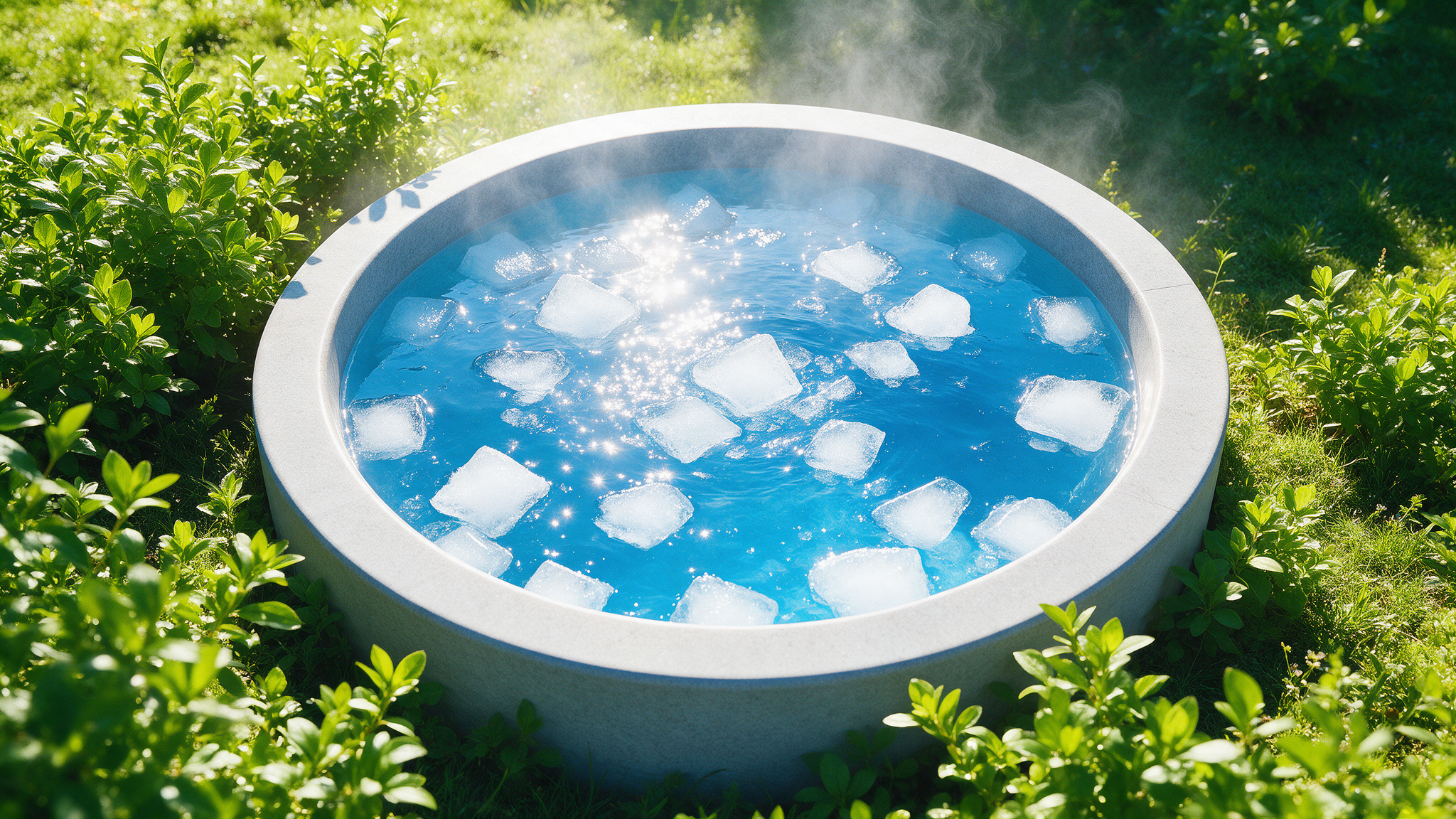
A few years ago I was speaking at an event where someone had set up an ice plunge for anyone willing to try. I do not chase trends, but I believe in showing up for science-based wellness, and I was curious. So I climbed in.
The water was somewhere around 40 degrees, and every cell sent the same message at once. Get out. My breath caught. My shoulders climbed toward my ears. It turned out to be a lesson in the stress pillar of how we approach health, not the metabolic one.
What does cold plunging actually do?
Less than the claims suggest. A 2025 systematic review and meta-analysis in PLOS One, looking at randomized trials of cold-water immersion, found some signal for reduced stress and improved mood and sleep, with much of the evidence still small, short-term and mixed. The cardiovascular and metabolic benefits remain unproven for healthy people.
The wellness world has made big claims. Faster metabolism. Brown fat activation. Reduced inflammation. A massive dopamine surge. Longer life.
The dramatic dopamine and brown fat numbers you see on social media often come from small mechanistic studies extrapolated far beyond what the data support.
In other words, the proposed biological mechanisms are not fully there. And yet people keep reporting that it helps.
How can something work if the mechanism is wrong?
Because a practice does not have to do exactly what its advocates claim in order to be useful. My view is that the ice plunge is not primarily a metabolic intervention. It is a mindfulness intervention wearing a metabolic costume, and the benefits follow from that rather than from brown fat.
When I am cold in normal life, I fight the feeling. I reach for a jacket, turn up the heat, step inside. In an ice plunge, you cannot. The alarm screams the same thing it always screams, get out, but the situation does not allow it.
So you stop fighting and start watching. For two minutes I watched my breath lengthen. I watched the panic in my chest soften into attention.
I watched the thought this is unbearable dissolve, because it turned out it was bearable, one second at a time. By the time I stepped out, I felt something I can only describe as clean.
The cold strips away every distraction. You cannot scroll. You cannot plan. You cannot ruminate about yesterday or rehearse tomorrow. Your nervous system pulls you, against your will, into the only place you can actually live, which is right now.
Do I need an ice plunge to get this benefit?
No. A walk without your phone will do. A long exhale at a red light will do. Sitting with a difficult feeling for ten seconds longer than you usually would will do. The plunge simply teaches the lesson quickly, because it leaves no room to negotiate.
Is cold plunging safe for everyone?
No, and this is not a small caveat. If you have existing cardiovascular disease, talk with your physician before trying a cold plunge. The cold causes vasoconstriction and a sharp rise in heart rate and blood pressure, which can stress the heart and in some cases cause real harm.
The shock response can also trigger arrhythmias in vulnerable people. This is the place where the practice meets actual risk, and it deserves a real conversation with someone who knows your history.