
A Common Question Emerging in GLP 1 Conversations
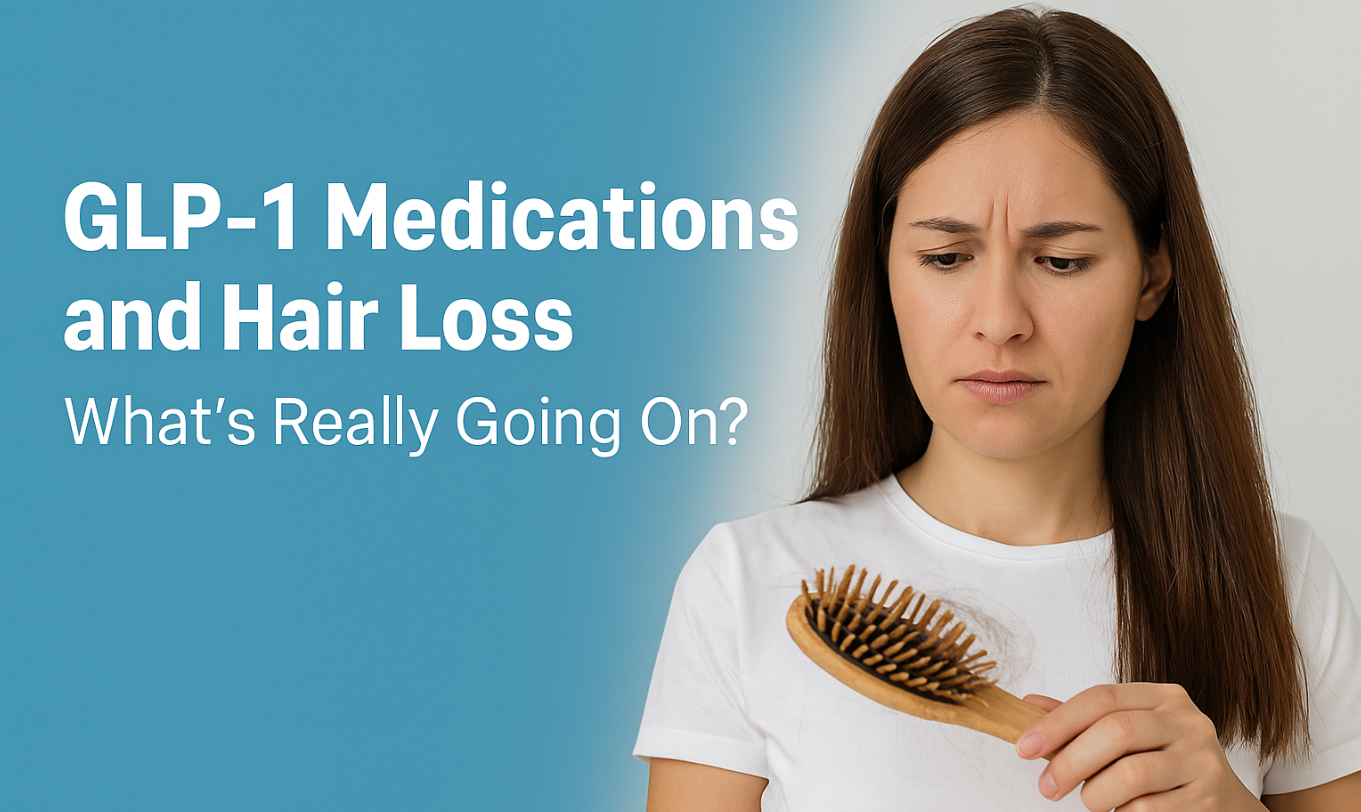
As more people turn to GLP 1 medications like semaglutide (Ozempic, Wegovy) and tirzepatide (Mounjaro, Zepbound) for weight management, a surprising concern has popped up in patient conversations: hair loss.
This symptom can feel unsettling for anyone experiencing it, especially when it shows up unexpectedly during a health journey that is otherwise going well. Because this question has become more common, it is worth slowing down and looking closely at what is actually happening. Understanding the root cause often brings a lot more clarity and a lot less worry.
So, what is behind it, and is the medication itself to blame? Let us break down what recent research and clinical experts are finding.
Why Some People Experience Hair Shedding on GLP 1s
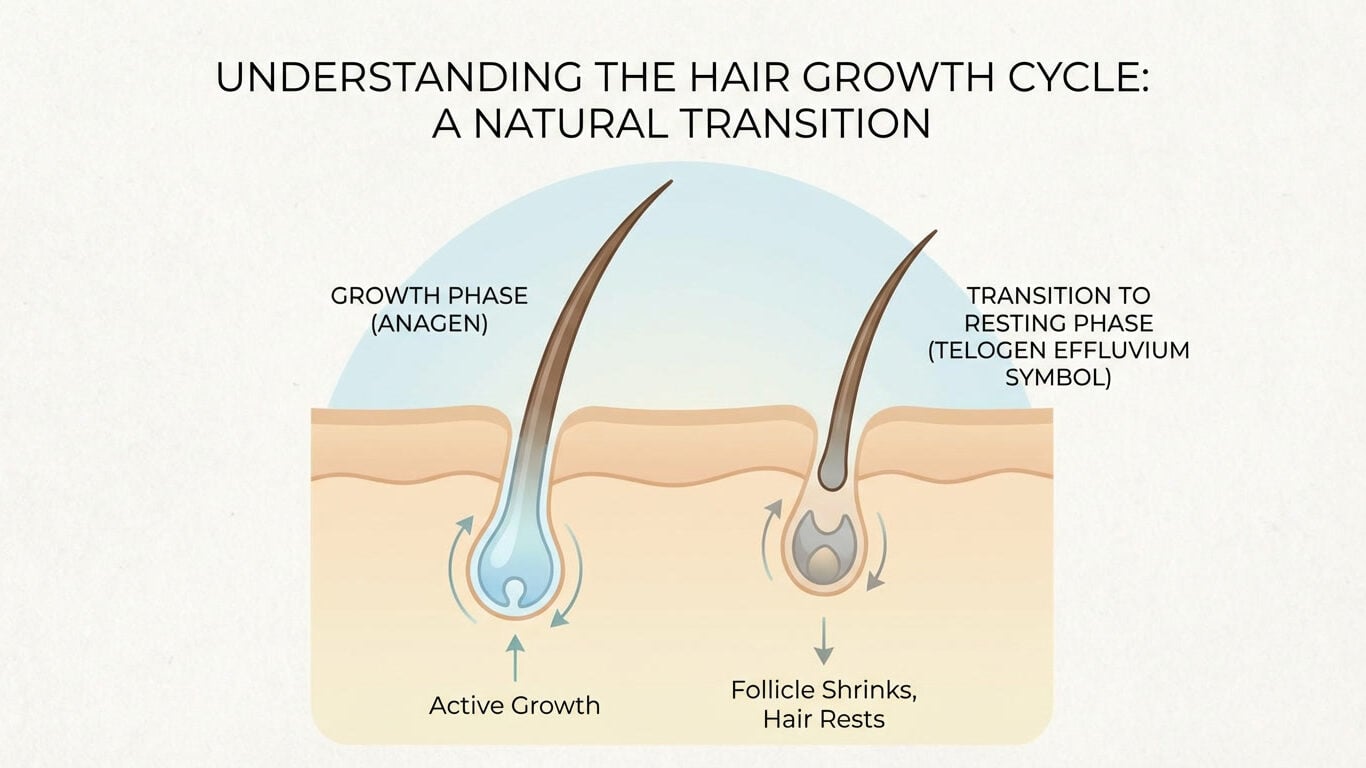
Most reports of hair loss on GLP 1 medications are not due to the drug directly damaging hair follicles. Instead, it is usually a temporary condition called telogen effluvium, often shortened to TE.
What Telogen Effluvium Really Is
Telogen effluvium happens when the body undergoes a sudden change such as rapid weight loss, reduced calorie intake, or nutrient deficiency that shocks the system. Hair follicles shift from the growth phase to the resting phase, causing increased shedding about two to three months later.
This pattern is familiar to many people even outside the context of GLP 1 medications. If you have ever noticed more hair in the shower drain after pregnancy, major surgery, or a stressful illness, that is the same process. The body experiences a big shift, and hair responds by temporarily entering a resting state.
This can be emotionally frustrating, but understanding the mechanism helps make the process feel less alarming.
Is It the Medication or the Weight Loss
The science points to rapid weight loss, not the GLP 1 itself, as the main trigger. When the body sheds pounds quickly, it sometimes does not get enough protein, iron, zinc, or B vitamins to keep hair follicles healthy.
When Medication Might Play a Minor Role
However, there are a few cases where the medication may play a role. In clinical trials of tirzepatide, about four to five percent of participants, mostly women, reported hair shedding compared with about one percent on placebo. The mechanism is not clear, but it may relate to hormonal or immune system changes.
For most people, though, this kind of shedding is temporary and resolves as the body adjusts and weight stabilizes.
This is why context matters. The body is adapting to changes in appetite, food intake, and metabolism. Hair temporarily reflects that adjustment period before normal growth resumes.
Why It Seems to Affect Women More
Women are more likely to notice and report hair changes, and they are also at higher risk of iron deficiency, which makes the follicles more vulnerable during rapid weight loss. Hormonal differences and how women experience hair volume loss also contribute to the concern.
Because women often track hair texture and volume carefully, they may pick up on even small shifts, which can make the shedding feel more dramatic even when it is temporary. Understanding this helps reduce some of the fear when shedding appears suddenly.

What You Can Do to Protect Your Hair
If you are on a GLP 1 and start to notice increased shedding, there are steps you can take that support both overall health and hair health.
Practical Steps That Make a Difference
Stay nourished: Make sure you are getting enough protein, aiming for at least one gram per kilogram of body weight, and balanced micronutrients.
Monitor key nutrients: Ask your provider to check iron, ferritin, thyroid function, and vitamin levels.
Slow and steady wins: Rapid weight loss is a major trigger. Your hair and metabolism prefer gradual progress.
Be patient: Hair shedding often peaks a few months after weight change and improves within three to six months once your body stabilizes.
If hair loss is patchy or persistent, your provider may refer you to a dermatologist to rule out other causes like alopecia areata or pattern hair thinning.
These steps are not meant to complicate your routine. They are simply supportive practices that help your body adjust with fewer disruptions to hair health.
The Bottom Line
GLP 1 medications can be life changing tools for managing weight and improving health. While some temporary hair shedding can occur, it is rarely permanent and usually linked to the speed and nutritional side effects of weight loss, not the medication itself.
Supporting Your Health and Your Hair
With mindful nutrition, gradual progress, and regular check ins, you can protect both your health and your hair. Most importantly, remember that this process is reversible and temporary for most people. Your hair recovers as your body finds its new equilibrium.


